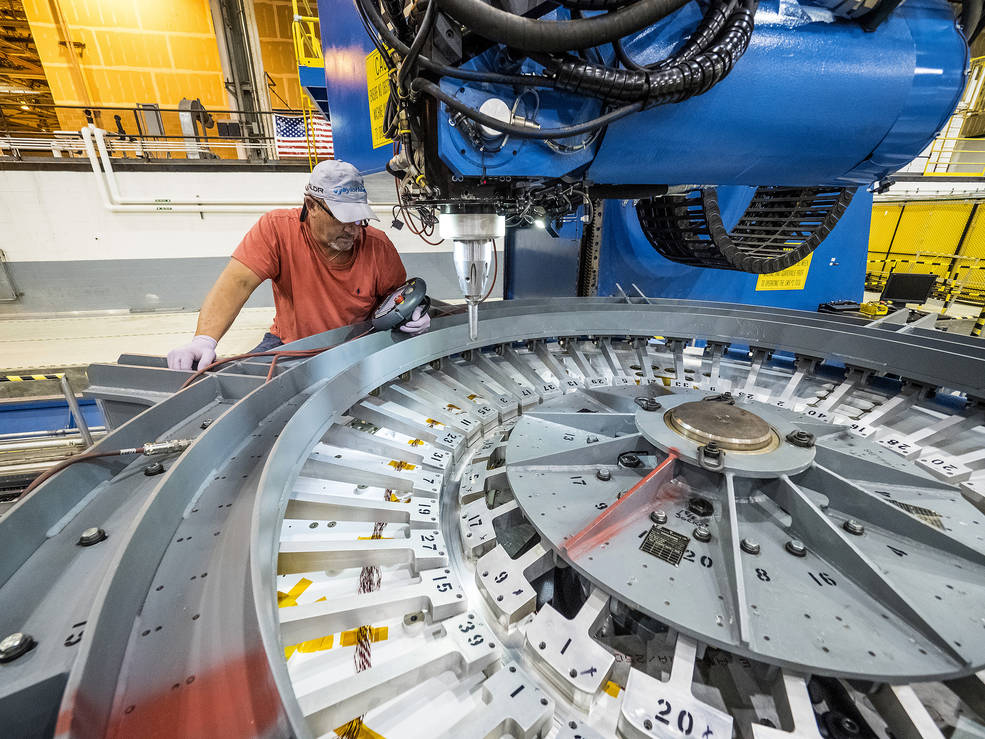
PAR’s Automated Thermal Protection System Supports NASA’s First Crewed Deep Space Mission
Automated Spray Systems and Adaptive Manufacturing for NASA’s Artemis II Mission
PAR Systems is proud to continue supporting NASA’s Artemis lunar exploration program with advanced automated spray systems that play a key role in applying the thermal protection system (TPS) to critical rocket components of the Space Launch System (SLS) rocket on the Artemis II mission.
While PAR’s automated spray technology is essential in the manufacturing of the SLS core stage by applying insulation and protective coatings that help maintain proper temperatures for cryogenic propellants and support thermal performance during launch and ascent.
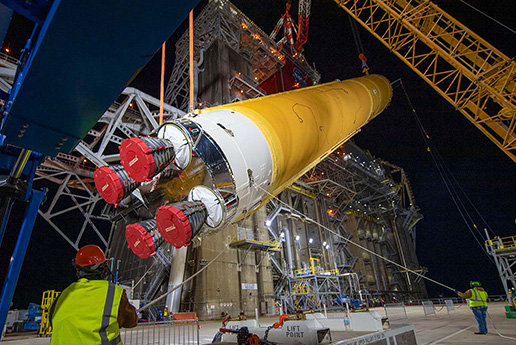
Above: Having recently completed application of the thermal protection system, teams will now continue outfitting the 130-foot-tall liquid hydrogen tank with critical systems to ready it for its designated Artemis mission. The core stage of SLS is the largest ever built by length and volume, and was manufactured at Michoud using state-of-the-art manufacturing equipment. (Source: NASA)
Thermal Protection System on Artemis II
NASA’s Artemis II will be the first mission to carry astronauts beyond low Earth orbit in more than five decades, with four crew members flying aboard the Orion spacecraft on a roughly 10-day lunar flyby around the Moon. The TPS systems PAR supports are mission-critical in enabling the SLS rocket to function reliably in extreme environments from ground to space.
The thermal protection applied to the SLS core stage’s liquid hydrogen and liquid oxygen tanks helps insulate the cryogenic propellant from heat that could cause boil-off prior to launch. Maintaining these extreme low temperatures (below -420 degrees Fahrenheit) is vital to ensuring the rocket stages perform as designed and deliver Orion and its astronauts safely into their mission trajectory.
Adaptive Manufacturing Technology in Action
PAR’s automated spray systems leverage adaptive manufacturing technology, allowing precision control of critical process parameters such as spray RPM, temperature, pressure, and applicator stand-off relative to the curved surfaces of massive rocket components. This enables:
- Exact thermal protection thickness across large, complex geometries
- Consistent part-to-part quality on components measuring over 200 feet in length
- Greater manufacturing efficiency and reduced variability
- Minimized rework and reduced production time
This adaptive approach is vital for Artemis II because even slight inconsistencies in TPS application can impact performance or require costly rework- outcomes that are unacceptable in human-rated spaceflight systems.
After the TPS foam is sprayed, additional adaptive manufacturing operations are used to machine and trim material where necessary so that interfaces, attachment points, and fittings remain within tight tolerances. PAR’s process can identify surface deviations and adapt cutting and machining paths automatically, which significantly improves accuracy and effectiveness compared to static programming.
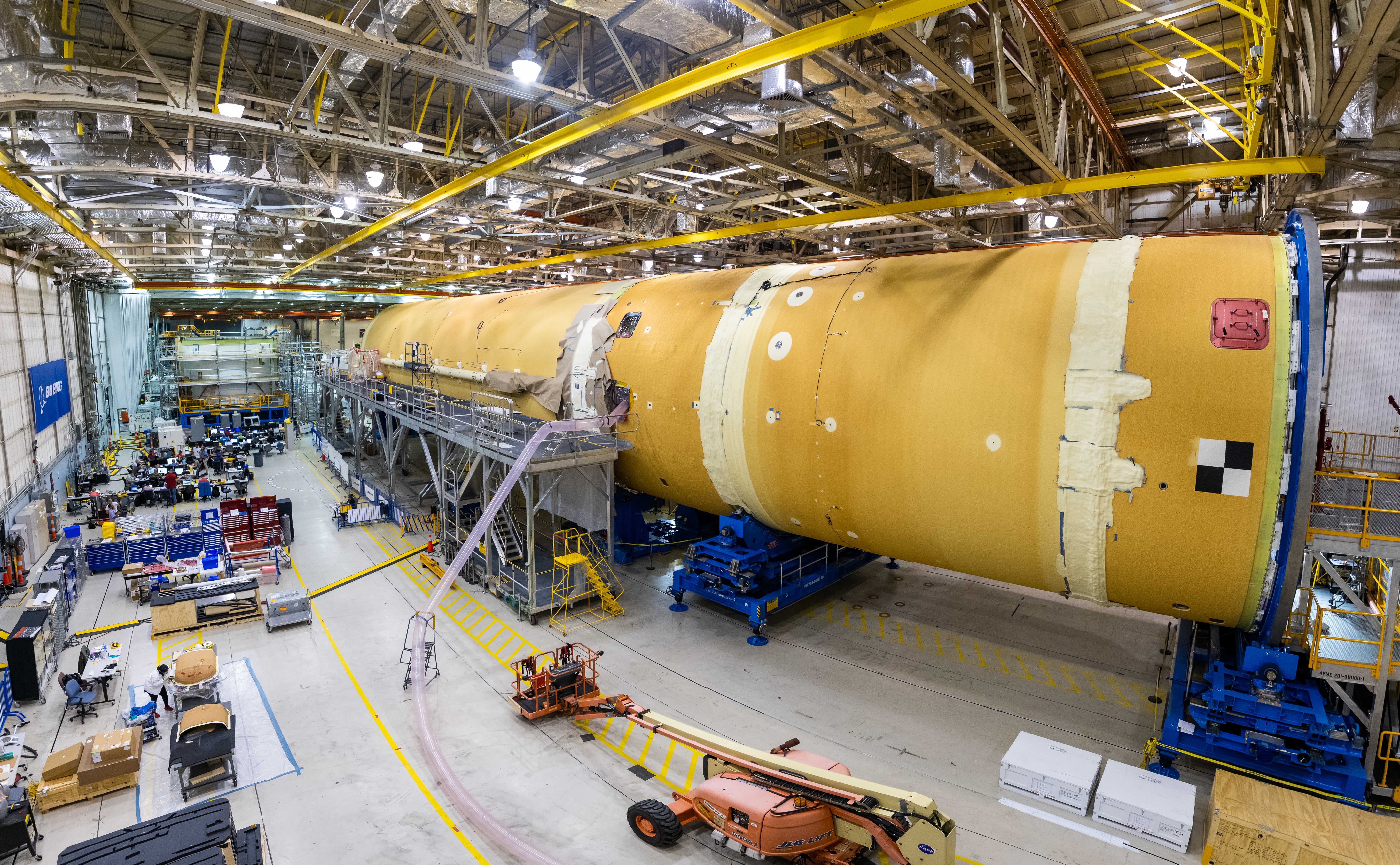

Image credits: NASA
Why Automated Spray and Adaptive Manufacturing Matter
On Artemis II, building the SLS rocket core stage to exacting specifications continues to be one of NASA’s foremost manufacturing challenges. By designing and deploying automated TPS spray systems, PAR Systems helps NASA:
- Reduce production time and cost on critical TPS applications
- Maintain consistent insulation performance across complex rocket surfaces
- Support high-reliability production for human-rated launch vehicles
As NASA readies Artemis II for its early 2026 launch- carrying astronauts farther into space than humans have traveled in decades- PAR’s technology underscores how adaptive manufacturing is not just an industrial advantage, but a mission enabler.
Looking Ahead
Thermal protection and adaptive spray systems are among many advanced manufacturing technologies that help bring NASA’s Artemis missions to life. They support the core stage’s ability to keep propellant at the temperatures needed to fuel the rocket through liftoff and ascent- the first, critical steps of every crewed deep-space mission.
PAR remains committed to evolving its automation technologies to help meet NASA’s ambitious goals, including crewed Moon landings and future exploration missions beyond the Moon.