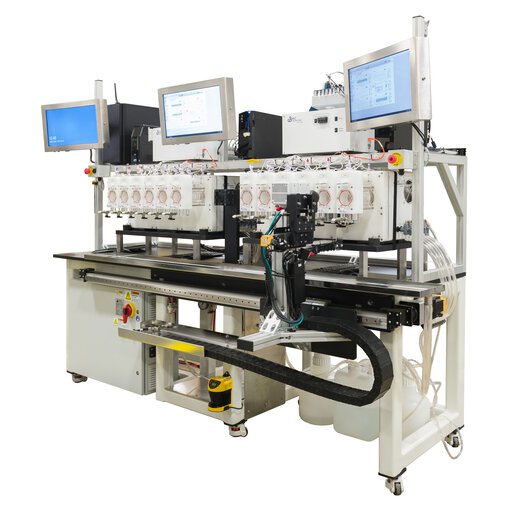
Automation Systems for Diagnostic Devices and Lab Workflows
Custom automation platforms for high-throughput, data-driven diagnostic manufacturing and sample processing.
Diagnostic Manufacturing & Lab Automation
Diagnostics manufacturing and laboratory automation require tightly coordinated systems that bring together devices, consumables, sample handling, and data infrastructure. PAR Systems delivers custom automation platforms where standard equipment and fixed workflows fall short.
PAR Systems designs custom automation platforms that support diagnostic device manufacturing and lab automation environments where standard equipment and fixed workflows fall short—delivering repeatable performance, reliable throughput, and robust system integration across diagnostic applications.
Lab Automation
Lab automation systems are designed to reliably move, prepare, and process biological samples at scale across multi-step workflows that combine disposable consumables, analytical instruments, and integrated data systems. Maintaining consistent sample handling, environmental control, and traceability is critical to sustaining throughput and diagnostic reliability.
Challenging automation steps commonly include:
- Aliquoting, pipetting, and reagent handling with tight volumetric accuracy
- Incubation, mixing, and environmental control across time-dependent processes
- Transport and buffering between workstations and analyzers without introducing bottlenecks
- Barcode-based traceability and LIMS integration to maintain data integrity and chain of custody
PAR’s custom lab automation solutions integrate motion, robotics, vision, and data connectivity—supporting high-throughput diagnostic workflows when off-the-shelf lab equipment cannot support upstream or downstream process steps, or when custom integration with LIMS, MES, or ERP systems is required.

Point-of-Care Devices
Manufacturing point-of-care diagnostic devices requires precise handling of small, highly sensitive components; tight control of bonding, sealing, and fluidic processes; and consistent alignment of sensing elements.
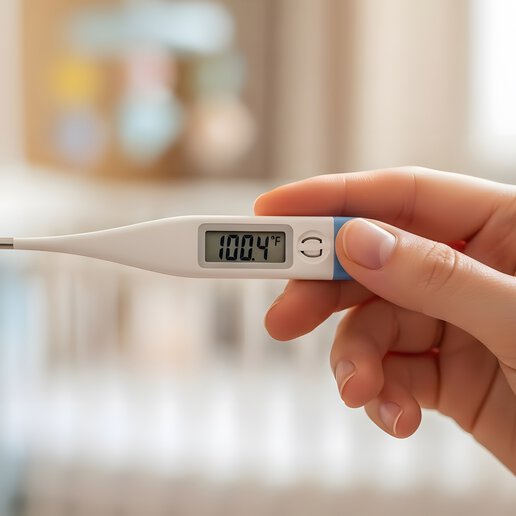
PAR designs custom automation solutions for point-of-care diagnostics and near-patient testing applications, integrating advanced processes such as:
- Precision handling and assembly of small diagnostic components
- Automated assembly of diagnostic cartridges, consumables, and test modules
- Laser processing, welding, and bonding for sealed, high-integrity assemblies
- Vision inspection and process verification for critical fluidic and sensing features
Beyond traditional cartridge-based diagnostics, point-of-care testing is increasingly extending into wearable and patient-connected diagnostic platforms—including systems that continuously acquire, process, and transmit physiological data at the point of use.
Diagnostic Cartridges
Microfluidic and reagent-based diagnostic cartridges are critical to laboratory and point-of-care systems, controlling how samples and reagents are metered, mixed, and analyzed.
Common automation challenges include:
- Precision assembly of microfluidic layers and membranes
- Accurate dispensing of liquid or dried reagents
- Bonding and sealing without compromising fluidic integrity
- In-line inspection of critical features
- High-volume production with full traceability
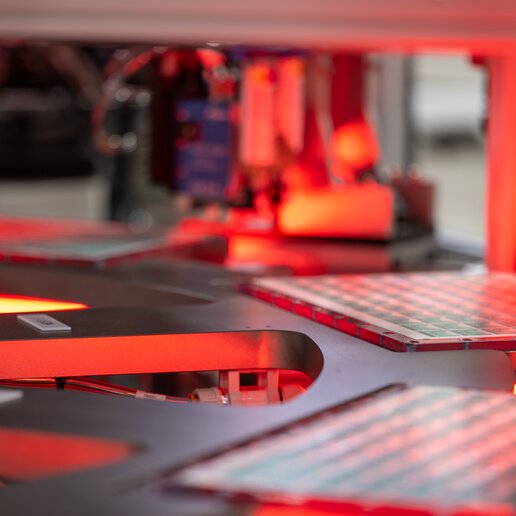
Examples of Our Diagnostics Solutions
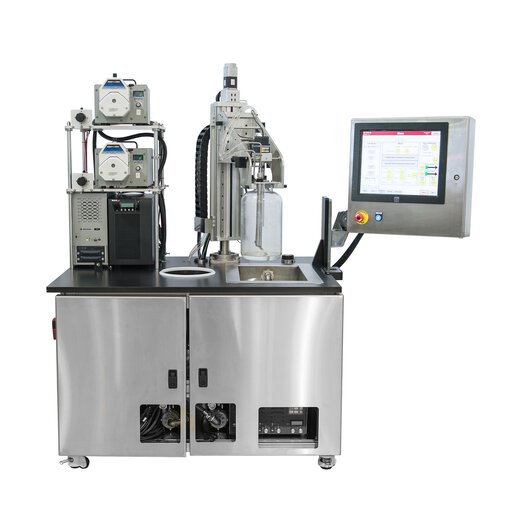
Chemistry Analyzer
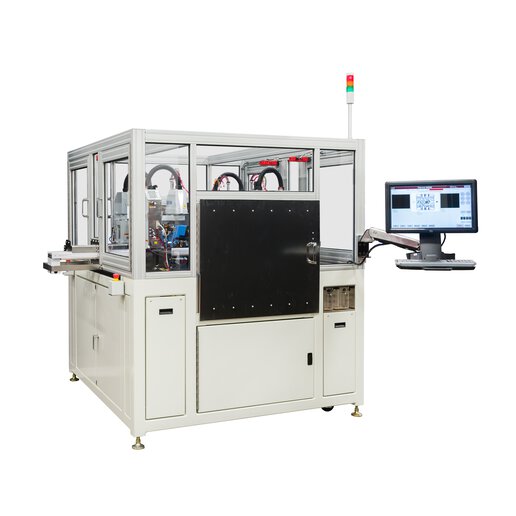
Tube Labeling
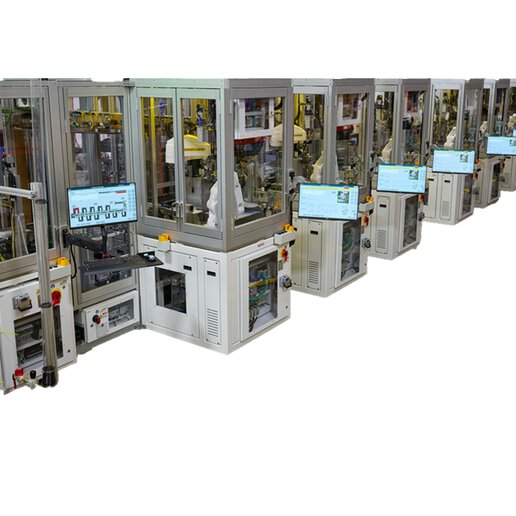
Aliquoting