Physical AI for Complex Manufacturing Environments
Combining sensing, mapping, planning, and automated execution to help manufacturers respond to real-world variation in parts, geometry, and process conditions.
What is Physical AI in Manufacturing?
Physical AI in manufacturing refers to systems that can sense real-world conditions, plan and adapt the required action, and execute that action through automation. At PAR, Physical AI enables automated, real-time adjustments of manufacturing processes to help customers move beyond rigid part presentation and process conditions. Instead of relying only on fixed tooling and fixed programming, our systems use sensing and planning to respond to the real condition of the work itself. That makes Physical AI especially relevant for high-value, high-mix, and tolerance-critical manufacturing applications even when parts are not in their nominal contour or shape.
Sense. Plan. Execute.
Why Traditional Automation Breaks Down
Many automated systems perform best when every part is presented in the same position, every surface matches the nominal model, and every process condition stays within a narrow range. But many real manufacturing environments do not work that way.
High-mix production, large contoured parts, variable geometry, changing work conditions, and tolerance-critical processes can all create situations where fixed tooling and fixed programming become too limiting. Physical AI becomes relevant when automation needs to respond to what is actually in front of the system, not just what was assumed during programming. Example applications include:
- Part geometry varies from one workpiece to the next
- Work envelopes are too large or too variable for rigid assumptions
- Tool paths must adapt to the actual condition of the part
- High-mix, low-volume production makes repeated manual reprogramming inefficient
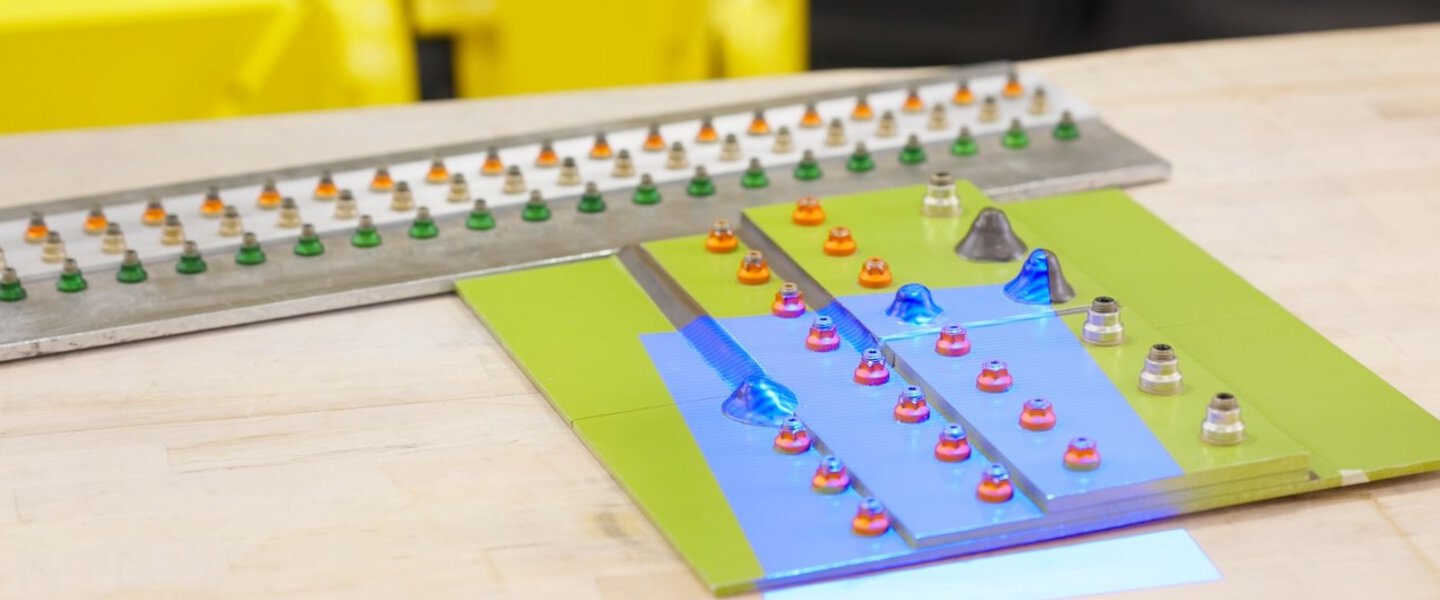
Sense Real Conditions
Understand the geometry, part mix, and work conditions
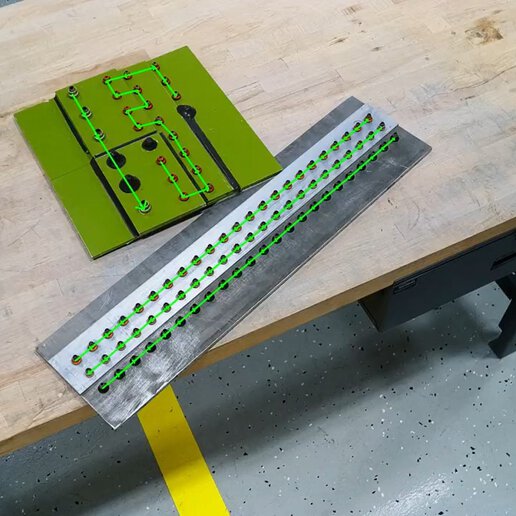
Plan the Right Action
Adapt for variation based on sensed conditions

Execute With Precision
Apply automation with process-aware precision
Physical AI in Practice
These examples show how PAR applies sensing, adaptive planning, and automated execution to real manufacturing processes where geometry, position, and process conditions vary.
Adaptive Waterjet Trimming and Drilling System
This adaptive waterjet system helps trim and drill large, contoured parts while responding to real-world variation in geometry and position.
Adaptive Process Planning Powered by Vision Mapping and Planning
PAR’s vision-guided process planning technology helps automated systems identify part position and variation, determine the right process, and generate the tool path required for high-mix, low-volume manufacturing.
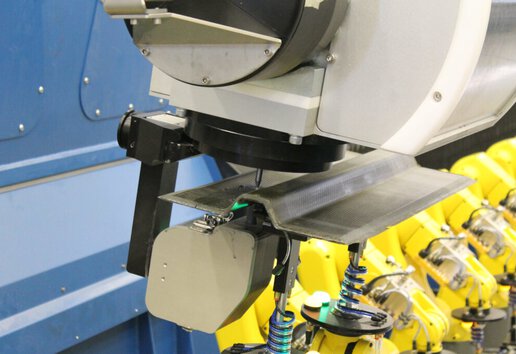
Adaptive Manufacturing for 400+ Composite Parts
This case study shows how one robotic fixture can support more than 400 aerospace composite parts, enabling rapid changeovers and in-cell inspection while helping reduce cost and improve production efficiency.
Applying Physical AI from Robot-Scale Cells to Large Format Manufacturing
PAR applies Physical AI in different ways depending on the size of the work envelope, the nature of the part, and the manufacturing task. In smaller, robot-scale environments, adaptive process planning helps identify targets, understand part pose, and generate the required tool path or action. In larger work envelopes, adaptive manufacturing systems helps systems respond to variation in part geometry, contour, and position across large-format processes and structures.
Robot-Scale and
Flexible Work Cells
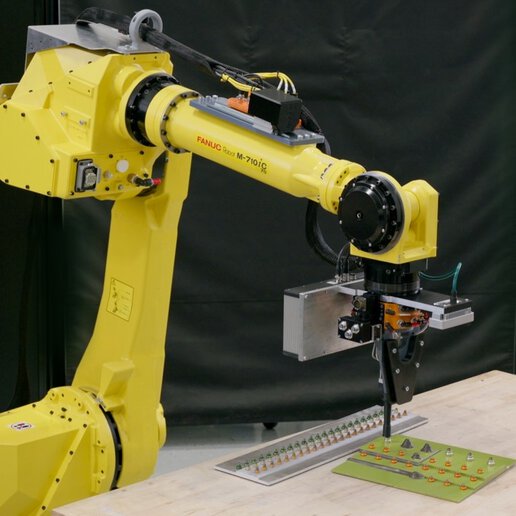
Adaptive Process Planning
Vision guided process planning best suited for robot-scale work envelopes and flexible automated cells where the system needs to identify targets, understand part pose, and generate the required path or action.
- Ideal for work envelopes within reach of an industrial robot
- Helps identify targets, determine part pose, and generate the required tool path or action
- Well suited for high-mix, low-volume automation
Large Scale and
Extended Work Envelopes
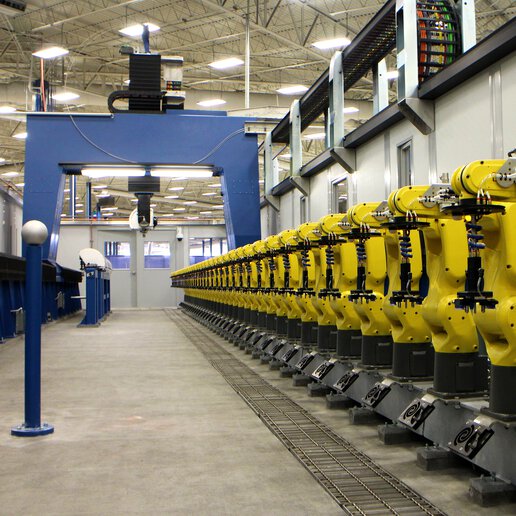
Adaptive Manufacturing Systems
Best suited for large-format work envelopes where automation must respond to variation in part geometry, contour, and position across larger structures and longer travel paths.
- Ideal for work envelopes beyond the reach of a single industrial robot
- Handles variation in part geometry, contour, and position across large structures
- Reduces dependence on rigid tooling for every part or condition
Best Fit Manufacturing Environments
Physical AI is especially relevant in production environments where variation is expected and automation has to respond to real conditions rather than idealized ones.
- High-mix, low-volume production
- Large contoured or variable-geometry parts
- Processes that require adaptive tool paths
- Manufacturing cells where dedicated tooling alone is too limiting
- Precision-critical applications with real-world variation
These are the environments where the combination of perception, planning, and process-aware execution can deliver the greatest value.
Frequently Asked Questions about Physical AI
What is Physical AI in manufacturing?
Physical AI in manufacturing refers to systems that can sense real-world conditions, interpret what is happening in the work environment, plan the required action, and execute that action through automation.
How is Physical AI different from traditional automation?
Traditional automation depends heavily on fixed assumptions about part position, geometry, and process conditions. Physical AI is more relevant when automation must respond to variation in the real manufacturing environment.
How is Physical AI different from machine vision?
Machine vision is one part of the picture. Physical AI is broader. It includes perception, planning, and physical execution, not only imaging or inspection.
How does PAR apply Physical AI?
PAR applies Physical AI through Advanced Manufacturing offers that connect sensing, planning, and execution in real production environments, including Adaptive Manufacturing and VMAP.
How do Adaptive Manufacturing and VMAP fit together?
Adaptive Manufacturing is the broader PAR manufacturing approach for handling variation in geometry, contour, and position. VMAP is the more specific PAR technology for vision mapping and planning in high-mix, low-volume automation.
Where is Physical AI most useful?
Physical AI is especially useful in high-mix, low-volume manufacturing, large or variable-geometry work envelopes, adaptive tool-path applications, and other environments where variation is part of the work.