What Does Physical AI Look Like on the Factory Floor?
PAR Systems Joins MnRI's Industry Roundtable
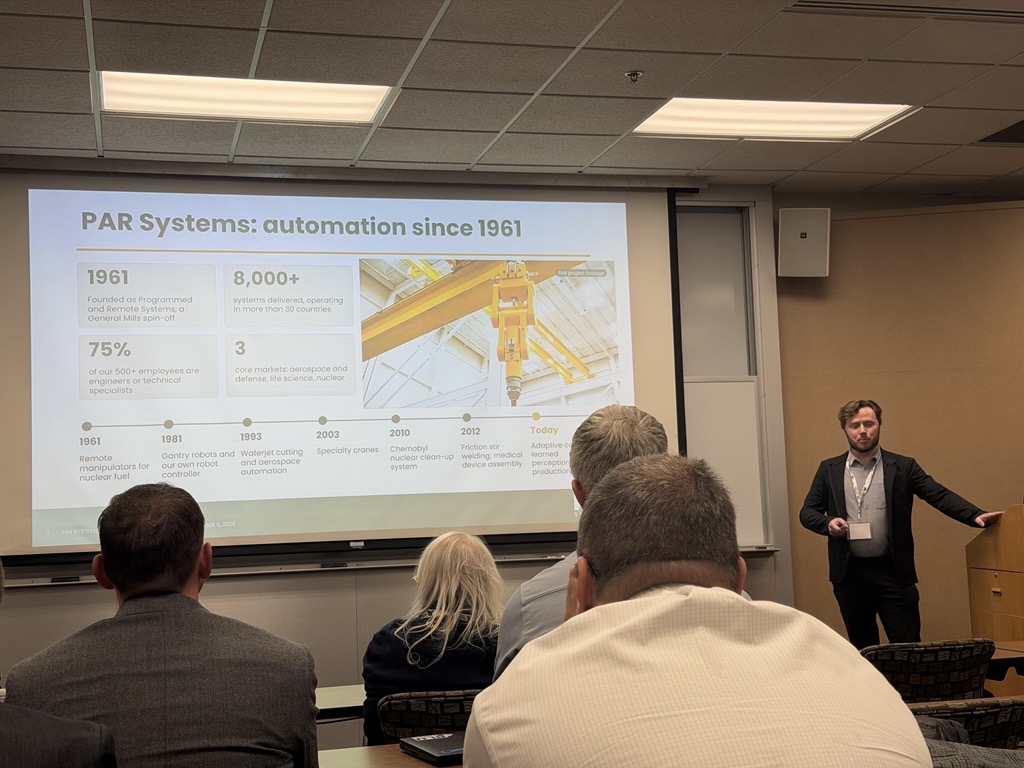
PAR Systems recently joined robotics researchers and industry professionals at the University of Minnesota’s MnRI Robotics Research Showcase. Danny Langan, Senior Software Engineer at PAR Systems, joined the Industry Roundtable as a speaker sharing an industrial perspective on Physical AI in manufacturing.
The Minnesota Robotics Institute (MnRI) advances interdisciplinary robotics research and education and connects University faculty and students with industry professionals. Thank you to MnRI for creating a setting for those perspectives to meet, convening the community and including PAR Systems in the discussion.
For manufacturing teams that exchange matters because research methods must meet a specific process, machine, tolerance, and operating environment. Industry experience helps make those constraints concrete; robotics research can bring new tools to address them. The challenge is to decide which approach fits each task and what evidence shows it works across real variation.
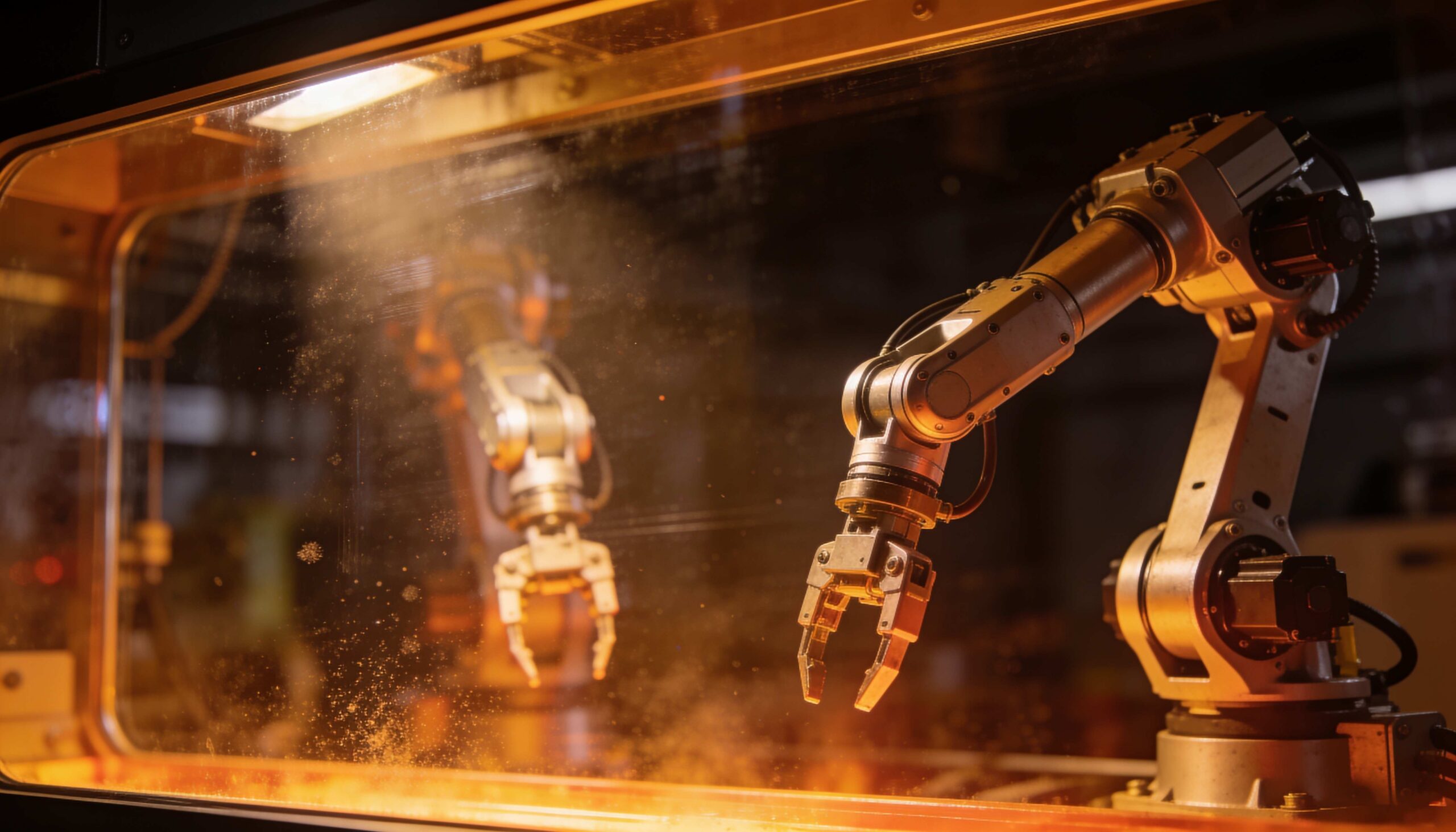
A presentation Langan prepared for the showcase, “Physical AI for Industrial Manufacturing,” considers a practical question at that intersection: where can sensing, measurement, planning, and learning help a manufacturing process handle real variation? Physical AI is a useful umbrella for this discussion, not a single technology or level of autonomy. The right approach depends on what the process needs to sense, decide, and do.
"The useful question is not whether a factory needs more AI. It is where sensing, planning, and learning can make a real process more adaptable- and how the system behaves when conditions change."
Danny Langan, Senior Software Engineer
Measure What Changes
Manufacturing rarely gets to work with a perfect version of a part. Large components can flex, settle, or arrive in a position that differs from the model. In high-mix production, the next part may bring different geometry or features. A robot can repeat a programmed path precisely and still miss the process if the part has moved.
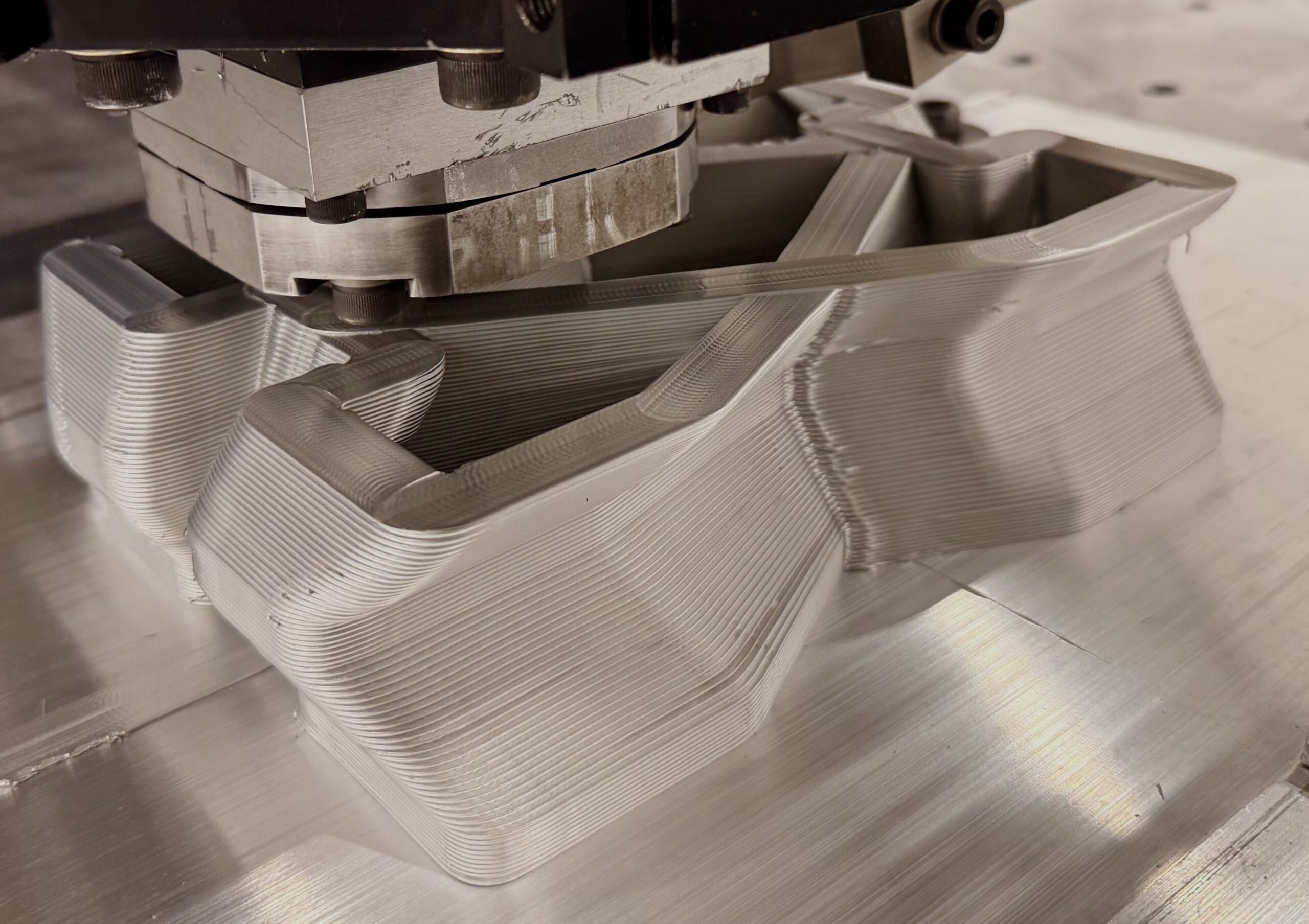
PAR Systems’ Adaptive Manufacturing approach uses sensors and monitoring systems to collect real-time data, profile actual part conditions, and adjust processes or tool paths. This can help account for differences between the part in front of the system and its nominal definition.
Not every manufacturing task needs a learned model. When measurements can guide an adjustment, that may be a suitable way to address process variation. Teams can start by asking what varies, what the system can measure, and whether the resulting adjustment fits the process requirements.
Put Learning Where It Helps
Other tasks can benefit from learned perception. PAR’s VMAP technology uses machine learning to identify target features in camera images captured from multiple positions. It calculates each target’s pose and generates a process-specific tool path. For applications requiring more precision, PAR describes optional refinement with a 3D structured-light scanner.
Adaptive Manufacturing and VMAP address variation in different ways. Adaptive Manufacturing uses sensing, profiling, and real-time data to adjust a process or tool path. VMAP applies machine learning to perception and path generation for high-mix, low-volume automation. The comparison between these approaches illustrates a broader point: start with the process task then choose whether machine learning, real-time sensing, or another method fits.
Design for the Real Cell
A method must work in the context of a production cell: its machines, controls, tolerances, cycle expectations, and operators. Teams need to define success and evaluate candidate systems against the variation they will encounter. They should understand what a system is responsible for and how it fits with surrounding automation.
Research is exploring systems that learn more than perception, including choosing actions during contact-intensive operations. Those remain open research questions, not capabilities to assume in a production cell. Moving learning closer to physical action requires evidence that the method can meet the task’s requirements.
Choose a Process to Evaluate
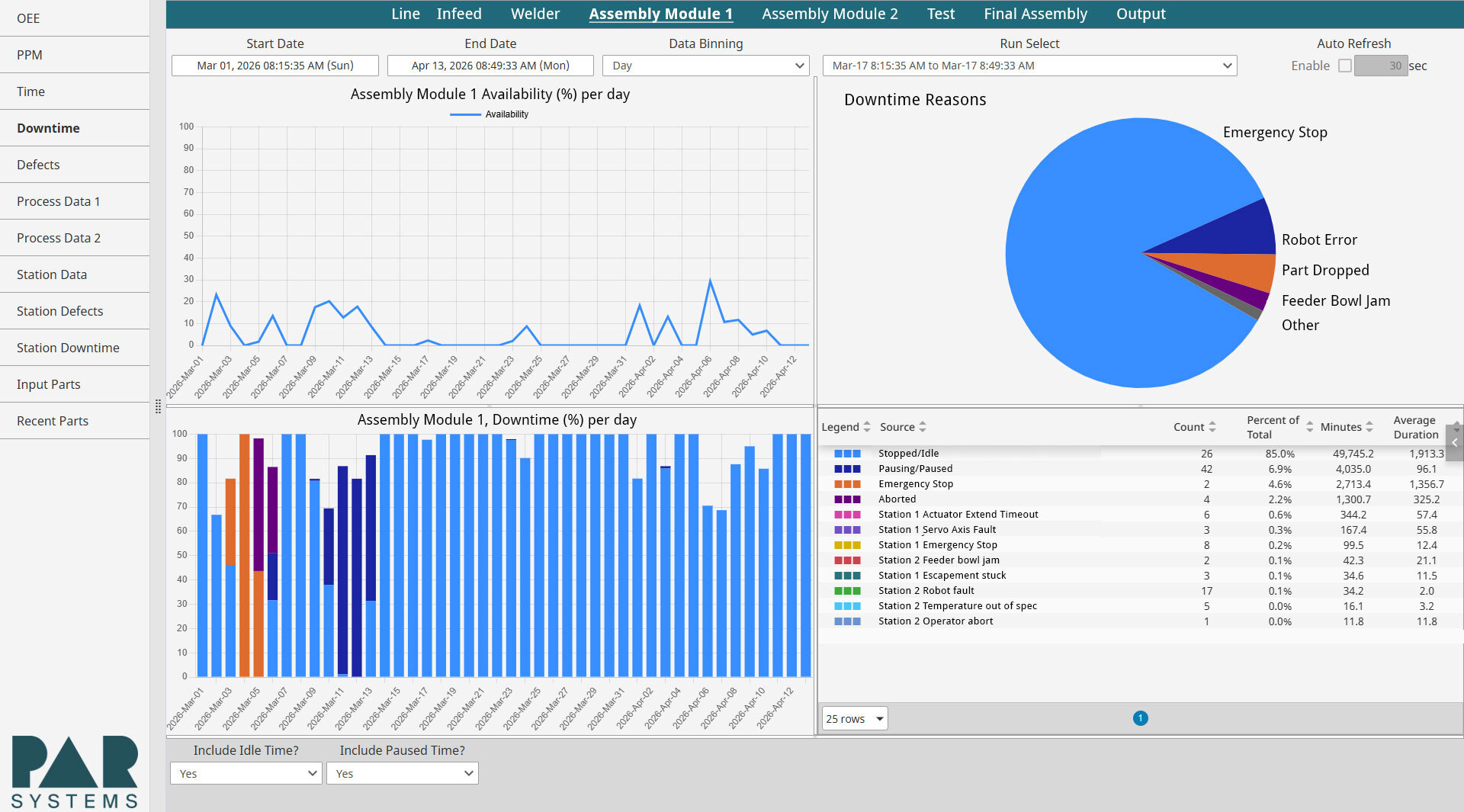
For manufacturers considering Physical AI, start with a process where variation creates cost or limits throughput. Describe the variation, identify what the cell can measure, and set a baseline. Before a trial, choose measures tied to the operation: cycle time, scrap, or engineering hours needed to handle a new part. Check quality and repeatability across representative parts and the range of variation the cell is expected to encounter. Track whether errors are detected and how long recovery takes. These measures help compare a candidate method with the current process and show where more validation is needed. Compare like work under similar production conditions, include representative parts rather than only easy cases, and review results against acceptance criteria with engineering and production stakeholders.